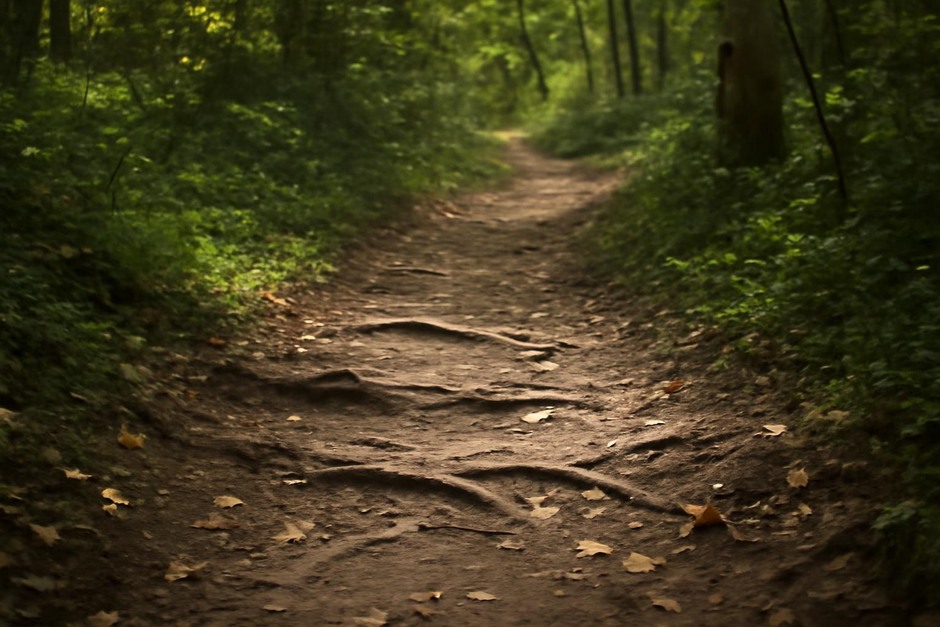
On a late-September walk I noticed the same stretch of trail three times. First, the surface: a band of pale gravel where the path had been widened by repeated footing. Second, the plants at the edge: grass pressed flat on one side and small wildflowers sun-tilted on the other. Third, a tiny rivulet cut into the shoulder, collecting a few coppery leaves. Each detail seemed minor until I started to see how they fit together: where people favor the route, where water moves, and where the trail is changing over the season. That connected view is something you can practice, wherever you walk.
1. Surface and Sound: What the Ground Tells You
The trail underfoot is the first page of the landscape’s story. Surface texture, compaction, and the sounds your steps make all reveal recent conditions and risks.
- Pause and listen: Take three slow steps, then stop. Did the path hiss like dry leaves, crack like frost, or slosh? The sound is a quick indicator of moisture and footing.
- Scan for changes: Look 5–10 paces ahead for shifts in surface—mud, exposed roots, loose gravel. These transitions are where slips and curiosity both begin.
- Try a touch test: Gently press a heel or a trekking pole into the edge. If the soil gives easily, note increased erosion risk; if it resists, the tread may be compacted and slow to absorb water.
Small experiment: on three different walks, mark a 10-foot section that feels unstable. Return weekly and photograph or sketch the same spot. Watch for widening, rutting, or recovery after rain.
2. Vegetation Patterns: Edges, Gaps, and Indicator Species
Plants outline the trail’s ecology. Look for patterns rather than single plants: where grasses encroach, where woody seedlings appear, where moss holds dampness. These clues tell you about light, disturbance, and seasonality.
- Note the edge: Is it abrupt (cut stems, bare soil) or gradual (tussocks of grass, creeping vines)? Abrupt edges suggest frequent traffic or recent maintenance; gradual edges suggest less disturbance.
- Spot indicator species: Some plants reliably appear in compacted soil (plantain, clover), while others prefer less-trod ground (violets, sedges). Learning a few common indicators makes quick reading possible.
- Watch for timing: Bloom, leaf-out, and seed drop happen at different times. Return to the same patch through a season to see how the plant community signals changes in light and moisture.
Practice task: pick a 2-yard stretch of edge and note three species you see at eye level and ankle level. Repeat monthly and write one sentence about what changed.
3. Water and Soil: Reading Flow and Storage
Water shapes trails more quickly than most other forces. Rills, puddles, soil color, and deposited debris show where water flows and where it pools.
- Follow the miniature channels: Even small grooves in the trail indicate a preferred route for stormwater. Walk them upstream to find their source—often a deflected sheetflow or a blocked culvert.
- Check for fine deposits: Sand or silt carried onto the trail is evidence of high-energy flow. Layers of leaf litter in a hollow mean occasional pooling rather than constant flow.
- Assess infiltration: In a bare patch, press a stick into the soil to estimate depth before hitting compacted layers. Shallower, compacted soils are less able to absorb heavy rain.
Mini-experiment: after a moderate rain, walk the same 100-foot section and note where water diverts off the tread. Mark one diversion point with a small, removable stone and watch how it changes over a month.
4. Human Traces and Time: Reading Use and Maintenance
Human activity leaves patterns that tell you about route preference, maintenance cycles, and community priorities. Read them with a neutral eye: some traces are helpful, some harmful, but all are informative.
- Look for recent work: Fresh cut branches, new blazes, or cleared drains mean recent maintenance. Note where these stop—those are places likely to need attention.
- Notice informal paths: Braided trails and shortcuts show where the official route may frustrate travelers. They reveal desire lines and seasonal needs.
- Observe signs of timing: Footprints, bike tire ridges, and dog tracks tell you about time of day and frequency. Combined with plant and soil notes, they help you reconstruct recent events.
Field note: take a single photograph of a junction and leave a short caption about what you think is happening there—who uses it, when, and why. Compare that caption with observations made a month later.
Conclusion: Practice That Keeps You Present
Reading a path is less about collecting facts than about rehearsing attention. The four practices above—ground and sound, vegetation, water, and human traces—are portable and repeatable. They turn any ordinary walk into a series of small experiments that reveal how a place changes with weather, seasons, and use.
If you want one modest habit to carry forward, bring a small notebook and write one sentence after each walk that names one change you noticed. Over time those sentences form a quiet record: a living map of how place and people meet.